Origami may be the cheapest creative hobby there is. A pack of paper, a kit, and an afternoon is genuinely all it takes to fold your first crane. Here's exactly what to buy, and just as importantly, what to skip.
By Colin B. · Published November 1, 2026 · Last reviewed November 1, 2026
Origami is one of the cheapest hobbies to start. A pack of kami and a good book get you folding for about $18; our recommended starter picks (a kit, 300 sheets of paper, and a bone folder) land around $39.
We earn commission on qualifying Amazon purchases — see our
affiliate disclosure.
Price tiers and budget totals shown above are editorial estimates;
actual Amazon prices vary.
At a glance
Our top pick in each category
The fastest path through this guide — each best-starter pick by category.
Scroll for the budget and upgrade alternatives.
Don't buy fancy paper first. Kami at 6 inches costs about 4 cents a sheet, and your first fifty folds are going to be ugly regardless. Practice on cheap paper (even printer paper cut square works) and spend on Tant or washi after you can fold a crane from memory.
Start with 6-inch (15 cm) squares. Almost every beginner diagram assumes that size. Larger sheets make small details easier later; smaller ones are fiddly. Don't mix sizes until you know what you're doing.
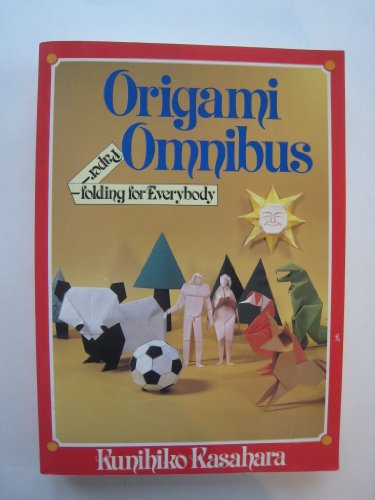
Don't start with Lang or Kasahara. Both are brilliant, but both assume you can already read diagrams. Begin with a kit written for first-timers, then graduate to the big books around week three.
Paper is the whole hobby, and the right beginner paper is boring: thin, square, colored on one side, cheap enough that you will happily ruin forty sheets. That is kami, and 6-inch (15 cm) is the standard size every diagram book assumes. Buy a few hundred sheets, not a fancy 25-pack. You will crumple your first few dozen learning to make a clean crease, so volume matters more than looks.
Practice Paper — what's the difference?
A few common shapes, each making a different trade.
Kami (6")
Thin, crisp, cheap. The default for learning and most models.
Size
15 cm / 6"
Weight
Light
Cost per sheet
2-5 cents
Best for Everyone's first few hundred folds and most classic models
Tradeoff Tears at stressed folds on complex models
Three hundred sheets of Japanese-made kami in 23 colors, including gold and silver, for around $14. That is under 5 cents a sheet, which is exactly the price at which you stop being precious about it. Colored on one side with a white back, so diagrams that say 'color side up' make sense.
What we like
300 sheets means you can fail freely
Japanese-made paper folds cleanly and creases crisply
Standard 15 cm size matches almost every beginner diagram
What to know
One-sided color; patterned two-tone models need a different pack
Eight dollars gets you 100 double-sided sheets in 50 colors. The paper is thicker than traditional kami, so it is a little stubborn on small folds, but it is a perfectly fine way to find out whether you like this hobby before you spend more.
What we like
Double-sided color suits models that show both faces
Tant is the paper origami nerds buy once they have the basics. It is textured and sturdy, takes dozens of creases without tearing, and is the standard for modular and tessellation folding. Around $8 for 100 sheets, it is cheaper than it looks, but it is not the right paper for your very first crane.
What we like
Survives repeated folding and unfolding without fraying
If you fall for the hobby, bulk is where it pays off. Five hundred sheets in assorted solid colors for about $21 works out to roughly 4 cents a sheet, enough for a year of regular folding, classes, and gifting.
What we like
Lowest cost per sheet of the packs we recommend
Good for classrooms, group folds, and gifting
Solid colors make step diagrams easy to follow
What to know
More paper than you need before you know you love it
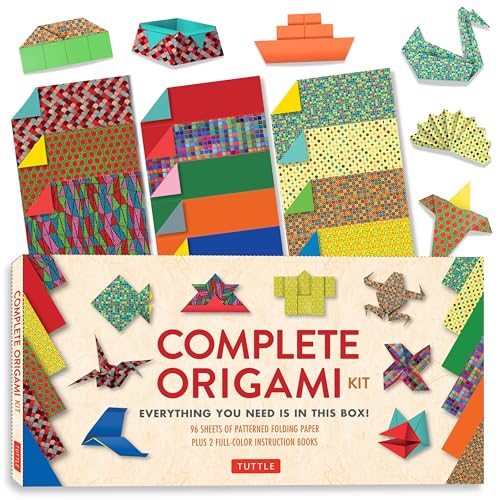
A kit takes the one decision beginners fumble, which is matching paper to instructions, and removes it. You get a book written for first-timers and the right sheets to fold it with, for about the price of lunch. If you buy one thing on this page, make it a kit: your first hour goes to folding, not shopping.
Best starter
Tuttle
Complete Origami Kit (Tuttle Studio)
$
★★★★★Our rating
Two short instruction books, 30 projects, and 98 sheets of 6-inch paper in one box for around $15. The projects climb gently from a simple cup to a crane, which is exactly how a first week should feel. It is the best-value way to find out whether you enjoy this.
What we like
Everything in the box, nothing else to buy
30 projects in a sensible easy-to-harder order
About $15 all-in
What to know
Paper is thin and plain; you will want more colors soon
A smaller pack of Japanese kami bundled with a simple beginner book for about $13. A good pick if the Tuttle kit's design does not appeal, or as a gift for someone you are not sure will stick with it.
What we like
Better paper quality than most boxed kits
Compact book is quick to get through
Good gift for a curious friend
What to know
Only 65 sheets; you will burn through them in a week
The bigger sibling: 45 models and 98 sheets in a full-color book. Same gentle ramp, more variety, and a few more rewarding finished pieces. Buy it once the first kit's projects feel easy.
What we like
45 models across animals, boxes, and flowers
Full-color photographs make steps easy to follow
Paper is the same standard 6-inch kami
What to know
Overlaps with the Complete Origami Kit's easiest models
Paper is still basic; pair it with Tant when ready
Diagrams are the grammar of origami, and learning to read them is what turns a hobby of copying into one of folding anything. Beyond your starter kit, two books are worth owning. Neither is a first-hour book, so treat them as the thing you graduate to around week three, not the thing you start with.
Best starter
Dover
The Complete Book of Origami (Robert J. Lang)
$
★★★★★Our rating
Around $10 for 37 models and more than a thousand diagrams from one of the great origami designers. The first chapters teach you how to read the symbols, and the book then runs from simple to seriously impressive. It is the best-value book in the hobby.
A 384-page tour of the whole art, from basic folds to modulars and tessellations, by one of Japan's most respected teachers. At around $45 it is a pricey buy, but it is the one you will still open ten years from now.
What we like
Covers basics, modular, and advanced models in one volume
Clear classic diagrams by a master teacher
A reference you keep for years
What to know
Around $45, a lot to spend before you know you love origami
Once you can fold a crane without looking, bigger sheets and unusual finishes become fun instead of frustrating. These are the extras worth buying second: larger squares so complex models have room for their folds, and shimmering paper for pieces you want to display. Skip them in week one.
Best starter
MECCANIXITY
8x8" White Origami Paper (25 Sheets)
$
★★★★★Our rating
Eight-inch sheets give complicated models room to breathe, and plain white is perfect for practicing a hard fold or painting your own pattern. About $7 for 25 sheets.
What we like
Bigger squares make multi-layer folds less fiddly
Plain white is great for practice or decoration
Under $7 for 25 sheets
What to know
Only 25 sheets
Some diagrams assume 6-inch paper and need size adjustment
Holographic paper shifts color in the light and makes a finished crane look like a gift. Save it for models you can already fold well, since every wrong crease stays on show.
Origami famously needs nothing but paper, and that is true. But one cheap tool earns its place: a bone folder. Sharp, flat creases are the difference between a model that looks crisp and one that looks tired, and your thumbnail only goes so far, especially on thicker paper like Tant. Nothing else is needed until much later.
Best starter
WUTA
Genuine Cattle Bone Folder (2 Pieces)
$
★★★★★Our rating
Real bone gives a smooth, burnished crease that plastic copies do not match, and it will not scratch or mark the paper. A two-pack for about $10 means one lives in your kit and one stays in the drawer.
What we like
Real bone leaves a clean, flat crease
Won't mar or scratch paper
Two pieces for around $10
What to know
Optional if you only fold thin kami
Some pieces arrive with slightly rough edges that need a quick sand
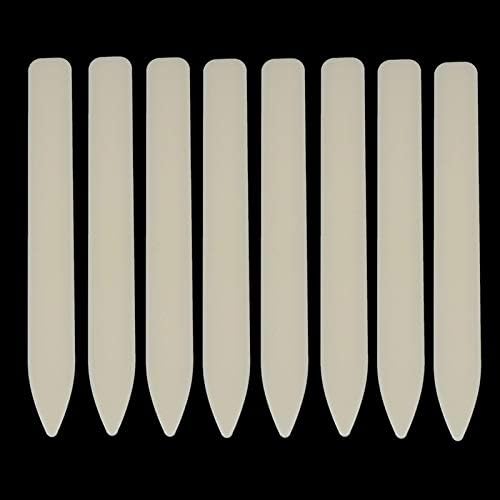
An 8-piece set for about the same money. The listing does not promise genuine bone and the quantity is overkill, but it will do the job of creasing and scoring if you want a variety of shapes to try.
Origami looks like magic and feels like a recipe. Here's what actually happens in your first week of folding, from the first wobbly cup to a crane you'd put on a shelf.
Origami has a reputation for being delicate and impossible. It is actually closer to following a recipe: a small set of folds, repeated in different orders. The hard part is not the folds themselves. It’s that nobody tells you how sloppy your first twenty will look.
Here’s what the first week really looks like, with the things that matter and the things you’ll be tempted to worry about but shouldn’t.
Days 1–2: Fold something simple, three times
Skip the crane. Start with a cup or a boat, something with five or six steps. Fold it, then fold it again, then a third time. Your third attempt will be visibly cleaner than your first, and that jump is the whole lesson: origami is not about talent, it’s about repeating the same crease until your hands know where it goes.
Two folds do almost all the work:
Valley fold. Fold the paper toward you so the crease sinks into a valley.
Mountain fold. Fold it away from you so the crease sticks up like a ridge.
Learn those two and the symbols that show them in a diagram (a dashed line for valley, dash-dot for mountain) and you can read most beginner instructions.
Work on a hard, flat table, not your lap. Line up the corners and edges before you press the crease down. A fold that’s off by a millimeter at step three is a mess by step eight.
By now your models probably look slightly deflated. The fix is boring: crease harder. Run your thumbnail, or a bone folder if you’ve bought one, along every fold from the center outward. A sharp crease is the difference between a model that stands up and one that sags.
Also, fold in good light, and look at the next diagram step before you finish the current one. Seeing where a fold is going makes it much easier to place.
Expect to throw away a lot of paper. That’s the plan, not a failure. This is why the 300-sheet pack exists.
Days 5–7: The crane
The traditional crane is the rite of passage, and it’s about 20 steps. It’s also a great teacher, because it uses the bird base, a shape that sits underneath dozens of other models. Once your fingers know it, you can fold cranes, flapping birds, and a lot more.
Don’t expect a perfect crane on the first try. Expect lopsided wings and a neck that won’t stay up. The second one will be better. The fifth will be something you’d hang from a doorway.
Pick one model to master. A single repeated model teaches more than ten different ones. Fold the crane or a box until you can do it without the diagram.
Try your first “real” book. Around week three, a book like Robert Lang’s The Complete Book of Origami teaches you to read every symbol, which is what makes the whole art accessible.
Switch papers. Try Tant, or a larger sheet, to see how much the paper changes the result.
Find other folders. Origami USA lists local groups. Folding with people is the fastest way to learn the next trick.
By the end of week one you’re not a beginner at paper, you’re a beginner at origami, which is a far more interesting thing to be.
Save your money
What you don't need yet
Beginners get pressured to buy a lot of stuff that doesn't help them play
better. Here's what we'd skip on day one.
Washi or chiyogami paper — Gorgeous, but $1-3 a sheet and unforgiving of mistakes. Wait until you can fold the model with your eyes shut.
Giant 14-inch jumbo sheets — Only needed for display models or very complex folds. Your first hundred models are better on 6-inch paper.
A cutting mat and craft knife — Not needed for classic origami. Those are for kirigami and card making, which is a different hobby.
Wet-folding supplies — Methylcellulose and heavy paper are an advanced sculptural technique. Skip it until you are folding animals with curved forms.
Modular origami sets — Kusudama and modular kits need hundreds of identical units. Great later, a slog as a first project.
First week
Your first seven days
A short, real plan to get from gear-on-doorstep to actually playing.
Order a starter kit so it arrives before the weekend. · Buy
Attempt the traditional crane by day five or six. It teaches a bird base and your fingers will remember it. · Action
FAQ
Common questions
How much does it cost to start origami?
You can be folding for about $8 with a pack of 100 sheets of kami, or about $39 with our recommended starter picks (a kit, 300 sheets of paper, and a bone folder). After that, paper is the only ongoing cost, at roughly 4 cents a sheet.
What is the best paper for beginners?
Kami: thin, cheap, and colored on one side. Buy it in the standard 6-inch (15 cm) size. Tant and washi are lovely, but they are stiffer or pricier, so save them until you can fold the model comfortably.
Can I use printer paper?
Yes, for learning. Cut an 8.5x11 sheet to a square and practice on it. It is heavier than kami and holds fewer layers, but it is free and good enough for a first week. Switch to kami once you want crisp small folds.
Do I need a book, or are videos enough?
Videos work well at the start because you can pause and rewind. A book teaches you to read diagrams, which is what lets you fold anything later without a tutorial. Most people end up using both.
Is origami hard to learn?
The first models are easy, and a cup or boat takes minutes. The difficulty ramps with the number of folds, not with any one fold. If you can follow a recipe you can fold a crane in your first week.
As an Amazon Associate, JustBeginning earns from qualifying purchases.
We may also earn commission from other affiliate programs linked on this
page. Editorial recommendations are independent; we don't choose
products based on commission rates.


 Best starter