By Colin B., published November 16, 2026, last reviewed November 16, 2026By Colin B., updated Nov 16, 2026We earn a commission if you buy through our links. How this works
Isopods are small land crustaceans that live in a tub of moist soil and leaf litter, cost little to keep, and come in surprising colors and patterns. Here's which starter species to buy, how to set up a bin with a humidity gradient, what substrate, leaves and wood to use, and how to feed them for a breeding culture or a bioactive cleanup crew.
00
The short version
Starter budget
$65 to $110
How hard
Easy to start
Day one
Pick a starter species like Porcellio laevis or Armadillidium vulgare and find a breeder.
Porcellio laevis (including the dairy cow morph), Armadillidium vulgare (the pill bug that rolls into a ball) and Porcellionides pruinosus (powder orange and powder blue) breed readily and forgive mistakes. Rare species like rubber ducky isopods are slow, expensive and need specific conditions.
Buy live isopods from a breeder, not a big marketplace.
Breeders ship cultures of 10 to 20 in insulated packages and replace dead arrivals. Live animals on general marketplaces often arrive stressed or are a different species than listed. Use Amazon for the supplies.
A humidity gradient is the key.
Keep one side of the bin damp and the other side drier, with moss in the wet corner and plenty of leaf litter and bark everywhere. Isopods move to the humidity they need. A bin that's wet everywhere grows mold and mites, and a dry one kills isopods.
02
Enclosures
Isopods don't need a fancy terrarium. A clear plastic tub with a latching lid holds humidity well, lets you see the colony, and costs a few dollars. Add a few small air holes in the lid and upper sides: some airflow prevents mold, but too much dries the bin. A 6 quart box suits a starter culture; move to larger bins as the colony grows.
Best starter$16.69as of Nov 16, 2026★★★★★ our ratingIn Stock
Sterilite
6 Quart ClearView Latch Box, 2 Pack
Clear, stackable latching boxes that hold humidity well and are easy to drill or melt air holes into. The second box is ready for a split culture or a second species. About $17 for two. 1,500+ reviews at 4.7 stars.
A plastic enclosure with a vented lid and a feeding hatch, already made for small animals. Easier than drilling a tub, but it dries faster, so cover part of the lid. About $17. 7,200+ reviews at 4.0 stars.
Isopods live in and on the substrate, so give them 2 to 3 inches of it. Coco fiber holds moisture and doesn't mold easily. Mix in crushed leaves and a little rotting hardwood or topsoil to make it richer. Keep one side damp and the other only slightly moist. Sphagnum moss in the damp corner holds humidity and gives isopods a moist place to molt and breed.
Best starter$11.03as of Nov 16, 2026★★★★★ our ratingIn Stock
Zoo Med
Eco Earth Coconut Fiber, 1 Brick
A compressed coco fiber brick that expands into several quarts of substrate when soaked in warm water. It holds humidity without souring. About $11. 1,200+ reviews at 4.7 stars.
Long-fiber sphagnum moss for the damp corner. It holds water for days, gives isopods a humid retreat, and is where many species hide their babies. About $6. 3,400+ reviews at 4.6 stars.
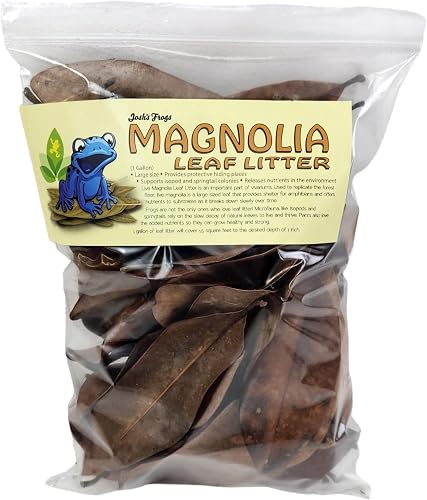
Dried leaves are the most important thing in an isopod bin: they're the main food, shelter and the reason a culture thrives. Oak and magnolia break down slowly and last. Add cork bark or pieces of rotting hardwood on top, because isopods gather underneath and many species eat it. You can collect your own from pesticide-free areas, then bake or freeze them to kill pests.
Best starter$15.99as of Nov 16, 2026★★★★★ our ratingIn Stock
XYZReptiles
Premium Live Oak Leaf Litter
Clean, dried live oak leaves sold for isopods and bioactive terrariums. Oak breaks down slowly, so a bag lasts a long time as food and cover. About $16. 1,200+ reviews at 4.7 stars.
Large, tough magnolia leaves from a well-known bioactive supplier. They make great hiding spots and last for months before breaking down. About $20. 200+ reviews at 4.6 stars.
A flat piece of cork bark to lay over the damp side. Isopods cluster underneath, and it lifts off easily so you can check on them. About $11. 750+ reviews at 4.5 stars.
Leaf litter is the base of the diet, but isopods breed better with protein and calcium. Offer a little protein once or twice a week, such as fish flakes, dried shrimp or a gel insect food, and remove anything that molds. Calcium is essential for molting. A piece of cuttlebone in the bin lasts for months. Small pieces of squash, carrot or cucumber are occasional treats.
Best starter$11.99as of Nov 16, 2026★★★★★ our ratingIn Stock
Repashy
Bug Burger Insect Gel Food, 6 oz
A powdered gel food you mix with hot water and set into cubes, with protein, vegetables and calcium. A small cube feeds a culture for days and is easy to remove if it molds. About $12. Few reviews on this listing, but widely used by keepers.
A cuttlebone is a cheap, long-lasting calcium source. Break off a piece and lay it on the substrate; isopods graze it as they need. About $2. 1,300+ reviews at 4.4 stars.
Isopods are easy to keep once the enclosure is right: deep moist substrate, plenty of leaf litter and wood, and a gradient from wet to dry. Here's an eight-week plan from building the bin to your first baby isopods.
Isopods are land crustaceans. They breathe through gill-like organs that need humidity, but they also need somewhere drier to retreat. Get that balance right and almost every common species thrives.
Week 1: Build the bin
Use a clear plastic tub or a small terrarium. Drill or melt a few small air holes in the lid and upper sides. Isopods need some airflow, but too much dries the bin out fast.
Add 2 to 3 inches of substrate: coco fiber mixed with some crushed leaves and a little rotting wood. Keep one half damp and the other half only slightly moist. Pile sphagnum moss in the damp corner. That gradient lets the isopods pick what they need.
Cover the surface with a thick layer of dried leaves (oak, magnolia or maple from pesticide-free areas, baked or frozen first). Leaves are both food and shelter. Add a piece of cork bark or rotting hardwood on top: isopods gather under it and many species eat it.
Start with an easy species: Porcellio laevis (including dairy cows), Armadillidium vulgare or Porcellionides pruinosus. Buy a starter culture of 10 to 20 from a reputable breeder. Put them in the damp corner under the bark. Leave them alone for a few days.
Leaf litter is their main food. Add protein once or twice a week, such as fish flakes, dried shrimp or a commercial isopod food, and a piece of cuttlebone for calcium, which they need for molting. Remove anything that grows mold after a day or two. Spray the damp side when the top dries out.
After a month or two you should see mancae, the tiny white babies, under the bark and in the moss. Once a culture is breeding, you can use some as a cleanup crew in a bioactive terrarium.
Two Sterilite 6 quart boxes, an Eco Earth brick, sphagnum moss, oak leaf litter, cork bark and a cuttlebone come to about $65. Add an Exo Terra Faunarium, magnolia leaves and Repashy Bug Burger and you're near $110. A starter culture of a common species usually costs $20 to $40.
10
Common questions
Do isopods smell?
A healthy bin smells like a forest floor. A sour or rotten smell means too much food or too much moisture. Remove uneaten food after a day or two, add dry leaves, and open a few more air holes.
What do isopods eat?
Mostly decaying leaves and wood, which should always be in the bin. Add protein once or twice a week (fish flakes, dried shrimp or isopod food) and keep a piece of cuttlebone in for calcium. Small amounts of vegetables like squash or carrot are a treat.
How long until they breed?
Common species usually produce babies (mancae) within one to three months in a good setup. Females carry eggs in a pouch under their body. You'll see tiny white babies under bark and in moss.
Can isopods live in my reptile or frog terrarium?
Yes, as a cleanup crew in a bioactive setup. They eat waste, shed skin and leftover food, and help keep the soil healthy. Use a hardy species that suits the terrarium's humidity, and keep a separate culture to restock.
Why are my isopods dying?
Usually the bin is too dry, there's no humidity gradient, or there isn't enough calcium. New cultures can also be stressed from shipping. Check that one side stays damp, there's moss and bark to hide under, and cuttlebone is available.
 Just Beginning