By Colin B., published November 16, 2026, last reviewed November 16, 2026By Colin B., updated Nov 16, 2026We earn a commission if you buy through our links. How this works
Everyday Japanese cooking rests on rice, dashi and a short list of seasonings: soy, mirin, sake and miso. Get those right and most home dishes follow. Here's how to choose a rice cooker (micom vs induction), a gyuto or santoku, a donabe and a tamagoyaki pan, and which pantry staples to buy first.
00
The short version
Starter budget
$205 to $510
How hard
Some practice
Day one
Buy a bag of short-grain Japanese-style rice and learn to wash it until the water runs mostly clear.
A good rice cooker and a bag of short-grain rice change Japanese cooking more than any knife. Micom cookers use a microchip to adjust heat and make excellent rice. Induction (IH) models heat the whole pot evenly and are a little better, especially with larger batches, for a higher price.
Buy real mirin and naturally brewed soy sauce.
Many bottles labeled mirin are mostly corn syrup with flavoring. Look for hon mirin or mirin made from rice and koji, and for soy sauce that lists just soybeans, wheat, water and salt.
Make dashi from scratch once.
Kombu and katsuobushi take 15 minutes and teach you what Japanese food should taste like. Then use instant dashi granules or packets on busy nights; most Japanese home cooks do.
02
Rice cookers
Japanese home cooking starts with rice, and a Japanese-brand rice cooker makes short-grain rice that's evenly cooked, glossy and slightly sticky every time, then keeps it warm for hours. Micom (microcomputer) cookers adjust heat as they cook and are excellent. Induction (IH) cookers heat the entire inner pot, which gives a little more even results, especially with bigger batches. A 5.5-cup cooker suits most homes.
Best starter$241.57as of Nov 16, 2026★★★★★ our ratingIn Stock
Zojirushi
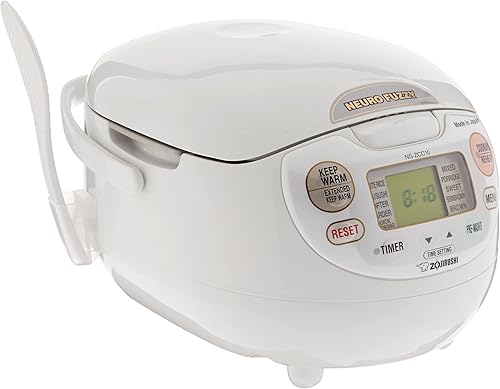
Neuro Fuzzy Rice Cooker and Warmer, 5.5 Cup (NS-ZCC10)
A long-time favorite micom cooker with settings for white, sushi, brown, porridge and more, a spherical inner pot for even heating, and a reliable keep-warm. It makes excellent short-grain rice with no guesswork. About $242. 12,000+ reviews at 4.7 stars.
JBV-A10U 5.5-Cup Micom Rice Cooker with Tacook Tray
A simpler Japanese-brand micom cooker at less than half the price, with a tray that steams a side dish while the rice cooks. It makes very good everyday rice. About $110. 6,700+ reviews at 4.6 stars.
Induction Rice Cooker and Warmer, 5.5 Cup (NW-QAC10)
Zojirushi's induction (IH) cooker heats the whole inner pot, giving very even texture across the batch. Worth it if you eat rice most days. About $316. 500+ reviews at 4.6 stars.
One good Japanese knife handles nearly every home task. A gyuto is the Japanese chef's knife: pointed, about 210mm long, and good for meat, fish and vegetables. A santoku is shorter and flatter, comfortable for push-cutting vegetables. Japanese knives are thinner and harder than Western ones, so they cut cleanly but chip if you twist them in bones or frozen food. Hand wash and dry them right away.
Best starter$102.39as of Nov 16, 2026★★★★★ our ratingIn Stock
Tojiro
DP Gyuto Chef's Knife, 210mm (FU-808)
The Tojiro DP is the gyuto knife people recommend most often as a first Japanese knife: a hard cobalt alloy steel core, a thin, sharp edge and a comfortable Western-style handle, made in Japan. It ships from Japan, so delivery can take longer. About $102. 360+ reviews at 4.7 stars.
A light, thin santoku from a Japanese maker known for knives that stay sharp a long time. Great for anyone who mostly cuts vegetables and prefers a shorter blade. About $85. 760+ reviews at 4.6 stars.
A beautiful Damascus-clad santoku with a D-shaped pakkawood handle, very sharp and easy to find. You pay partly for the looks, but it's a pleasure to use. About $130. 1,500 reviews at 4.8 stars.
A donabe is a Japanese clay pot used for nabe (hot pot) at the table and for cooking rice on the stove. The clay heats slowly and evenly and holds heat for a long time, which keeps broth simmering gently. Soak a new donabe and cook rice porridge in it once to seal the clay, never heat it empty, and let it cool before washing. A portable butane burner lets you cook hot pot at the table.
Best starter$67.99as of Nov 16, 2026★★★★★ our ratingIn Stock
Kotobuki
Donabe Japanese Hot Pot, Large
A classic glazed clay donabe sized for hot pot for two to four people, made in Japan. Use it on the stove or a tabletop burner for nabe, and for cooking rice. About $68. 4.9 stars from a small number of reviews.
The tabletop burner used in Japanese homes for hot pot and sukiyaki, with a wind shield and strong, steady flame. Runs on standard butane canisters. About $130. 2,100+ reviews at 4.7 stars.
Tamagoyaki, the sweet rolled omelet in bento boxes and on sushi, is cooked in thin layers in a rectangular pan, then rolled up. The square shape is what makes even, neat rolls possible. A nonstick pan is forgiving while you learn. Iron or copper pans are what Japanese cooks use for life, but they need seasoning and a little practice with heat and oil.
Best starter$24.99as of Nov 16, 2026★★★★★ our ratingIn Stock
TECHEF
Tamagoyaki Japanese Omelette Pan
A nonstick rectangular pan that's easy to learn on: the eggs release cleanly and roll without tearing. It works for other small jobs too, like frying a single egg or toasting nori. About $25. 7,500+ reviews at 4.7 stars.
A cast iron tamagoyaki pan made in Japan that heats evenly and lasts a lifetime. Once seasoned, eggs release well and brown beautifully. About $69. 720+ reviews at 4.8 stars.
A short list of pantry staples covers most Japanese home cooking: short-grain rice, naturally brewed soy sauce, mirin, sake and miso. Read labels on mirin: many cheap bottles are mostly corn syrup, so look for one made from rice and koji. Start with a mild white or mixed miso, which works in soups, dressings and marinades. Keep miso and opened mirin in the fridge.
Best starter$26.00as of Nov 16, 2026★★★★★ our ratingIn Stock
Tamaki
Gold California Koshihikari Short Grain Rice, 4.4 lb
A premium California-grown koshihikari, the rice variety Japan prizes most, with a sweet flavor and soft, sticky grains. A great rice for everyday meals, onigiri and sushi. About $26. 660+ reviews at 4.7 stars.
A traditionally made mirin from rice and koji with no corn syrup, for glazes, teriyaki and simmered dishes. Its gentle sweetness and depth are what cheap mirin-style seasonings imitate. About $17. 1,100+ reviews at 4.8 stars.
A mild, all-purpose miso from one of Japan's biggest miso makers, good in soup, dressings and marinades. A safe first miso before trying stronger red ones. About $11. 3,600+ reviews at 4.5 stars.
Dashi is the stock behind miso soup, simmered dishes and noodle broths. The classic version is kombu (dried kelp) soaked and gently heated, then katsuobushi (dried, smoked bonito flakes) steeped for a minute and strained. It takes about 15 minutes. Instant dashi powder is what many Japanese families use on weeknights, and it's perfectly fine. Make it from scratch first so you know what it should taste like.
Best starter$7.18as of Nov 16, 2026★★★★★ our ratingIn Stock
WEL-PAC
Dashi Kombu Dried Seaweed
Dried kombu for making dashi from scratch. Wipe a piece with a damp cloth, soak it in water for 30 minutes, then heat gently and remove it just before the water boils. One pack makes many batches. About $7. 3,700+ reviews at 4.5 stars.
Large, thin bonito flakes for dashi and for topping okonomiyaki, cold tofu and spinach. Steep a big handful in kombu stock for a minute and strain. About $8. 5,300+ reviews at 4.6 stars.
Instant dashi granules: stir a teaspoon into hot water and you have stock for miso soup in seconds. The weeknight shortcut most Japanese home cooks use. About $5. 2,800+ reviews at 4.5 stars.
Japanese home cooking rests on three things: well-cooked rice, a good dashi and a handful of pantry seasonings. Here's a four-week plan from your first pot of rice to miso soup, teriyaki, a rolled omelet and a donabe hot pot.
A Japanese home meal is usually rice, soup and one or two small dishes. Learn the first two well and the rest falls into place quickly, because the same few seasonings (soy, mirin, sake, miso, dashi) show up in almost everything.
Week 1: Rice
Buy a short-grain Japanese-style rice such as a California koshihikari. Measure with the cup that came with your rice cooker, then wash the rice: swirl it in cold water, pour off the cloudy water, and repeat three or four times until the water is mostly clear. Fill to the line in the bowl, let it soak 30 minutes if you have time, and cook.
When it’s done, fluff it right away with the paddle, cutting and folding so the grains don’t get crushed. Make onigiri (rice balls) with any leftovers: wet, salted hands and a little filling in the middle.
Make dashi from scratch once. Soak a piece of kombu in a liter of water for 30 minutes, heat it gently and take it out just before the water boils. Add a big handful of katsuobushi, simmer a minute, turn off the heat, let it sink, then strain. That’s it.
For miso soup, warm the dashi, add tofu and wakame, then turn off the heat and whisk in the miso through a small strainer. Never boil miso; it loses its aroma. Instant dashi granules are fine for weeknights.
Most home dishes use a version of the same base: equal parts soy sauce, mirin and sake, with a little sugar. Try chicken teriyaki in a pan, then nikujaga (simmered beef and potatoes) and a quick spinach goma-ae with sesame. Taste and you’ll notice how these dishes balance salty and sweet.
Tamagoyaki is a rolled, slightly sweet omelet made in thin layers. Beat three eggs with a little dashi, sugar and soy, oil the pan, pour a thin layer, and roll it up toward you once it’s half set. Push the roll back, oil the pan, pour the next layer under the roll, and repeat. The first few will be messy. That’s normal.
End the month with a donabe hot pot: dashi, vegetables, tofu, mushrooms and thin-sliced meat simmered at the table. Finish by cooking rice or udon in the leftover broth.
Try tamagoyaki. Expect the first two or three to be messy.
11
What it costs
Budget start
$205
Typical
$510
A Tiger micom rice cooker, Tamaki Gold rice, mirin, miso, kombu, katsuobushi and a TECHEF tamagoyaki pan come to about $205. Swap in the Zojirushi Neuro Fuzzy and add a Tojiro gyuto and a Kotobuki donabe and you're near $510.
12
Common questions
Do I really need a rice cooker?
No, but it makes rice effortless and consistent, and it keeps rice warm for hours. You can cook great rice in a heavy pot or donabe on the stove: wash, soak 30 minutes, bring to a boil, then simmer covered on low for about 12 minutes and rest 10.
Gyuto or santoku?
A gyuto is a Japanese chef's knife, longer and pointed, good for everything including rocking cuts. A santoku is shorter with a flat edge, comfortable for push cutting vegetables. If you're unsure, a 210mm gyuto is the more versatile first knife.
What rice should I buy?
Short-grain rice labeled for Japanese cooking, such as California-grown koshihikari (Tamaki Gold, Nishiki or Kokuho Rose for a cheaper option). Don't use long-grain or jasmine rice; it won't be sticky or sweet in the same way.
Is instant dashi cheating?
Not at all. Many Japanese families use dashi granules or tea-bag style dashi packets every day. Make it from scratch now and then for special dishes, and to know what you're aiming for.
Which miso should I start with?
A white (shiro) or mixed (awase) miso is mild and works in soups, dressings and marinades. Red miso is saltier and stronger. Keep miso in the fridge, where it lasts for many months.
 Just Beginning