By Colin B., published November 8, 2026, last reviewed November 8, 2026By Colin B., updated Nov 8, 2026We earn a commission if you buy through our links. How this works
A kalimba is a small wooden box or board with metal tines you pluck with your thumbs. There's no wrong note on a standard 17-key, so most people play a recognizable song within an evening. Here's how many keys to get, flat board vs hollow box, how to keep it in tune, and which songbooks are worth it.
00
The short version
Starter budget
$44 to $85
How hard
Easy to start
Day one
Order a 17-key kalimba in C and a beginner lesson book.
It's the layout almost every tab, songbook and YouTube tutorial is written for. A 21-key adds lower notes and costs a little more, but tabs for it are less common.
Flat board or hollow box?
Hollow boxes are louder, with a warmer, buzzier tone and a sound hole you can cover for a wah effect. Solid flat boards are quieter and clearer, with longer sustain. Both are fine to learn on, so pick the sound you like in videos.
Expect to tune it.
Tines shift in shipping and drift with temperature. Tuning is just tapping a tine up or down with a small hammer while watching a tuner, and every decent kalimba includes the hammer.
02
17-key kalimbas
A 17-key kalimba in C major is the standard starting point. The keys alternate left and right from the low center tine, so the scale zigzags outward. Solid hardwoods such as mahogany, koa and walnut sound warmer than plywood or acrylic, and keys stamped with note names save you from stickers. Spend under $70 here: the difference between a good $30 kalimba and a $60 one is tone, not playability.
Best starter$31.99as of Nov 8, 2026★★★★★ our ratingIn Stock
Gecko
Kalimba 17 Keys Thumb Piano with Waterproof Protective Box
The kalimba most players start on. A mahogany body with 17 tines in C, plus a protective case, tuning hammer, note stickers and a study booklet in the box. About $32. 9,300+ reviews at 4.8 stars.
A very popular gift kalimba with notes embossed on the keys and a curved hand rest. A solid way to find out whether you like the instrument for a few dollars less than the Gecko. About $26. 15,500+ reviews at 4.8 stars.
A solid American black walnut flat board with a sloped design, for the clear, bell-like tone and long sustain flat boards are known for. A step up in sound once you know you'll keep playing. About $62. 58 reviews at 4.5 stars.
More keys add range, not difficulty. A 21-key kalimba keeps the familiar C major zigzag but adds four lower notes, which helps with bass lines and fuller arrangements. Chromatic kalimbas add a second row of keys for sharps and flats, so you can play in any key. They're great later, but tabs are harder to find, so most people should learn on 17 keys first.
Best starter$49.99as of Nov 8, 2026★★★★★ our ratingIn Stock
MOOZICA
21 Keys Solid Koa Kalimba Flat Board
A single piece of solid koa with 21 tines from F3 to E6. The extra low notes give songs a fuller bottom end, and koa has a bright, singing tone. A good pick if you already know you want the bigger range. About $50. 680+ reviews at 4.6 stars.
A mahogany 21-key with accessories in the box, at roughly the price of a 17-key. The cheapest sensible way to get the extended range. About $26. 3,400+ reviews at 4.8 stars.
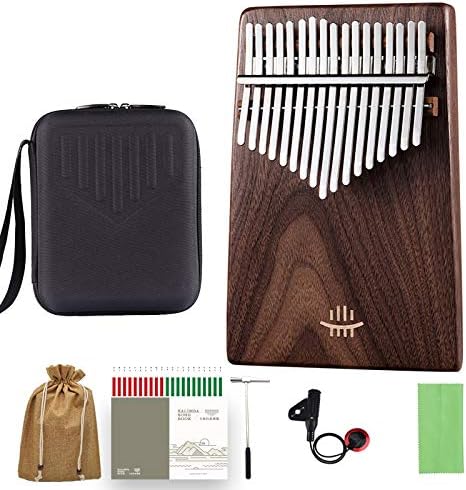
A two-row chromatic kalimba in solid walnut. The lower 17 keys keep the familiar diatonic layout, and the upper row adds the sharps and flats so you can play in any key. A built-in pickup lets you plug into an amp. About $90. 43 reviews at 4.6 stars.
To tune a kalimba, tap a tine toward you with a small hammer to lengthen it and lower the pitch, or away from you to shorten it and raise the pitch. A clip-on tuner reads vibrations straight from the instrument, which works better than a phone app in a noisy room. Most kalimbas ship with a hammer, so a tuner is the only thing many people need.
Best starter$23.99as of Nov 8, 2026★★★★★ our ratingIn Stock
Fender
FCT-2 Professional Clip-On Tuner
A chromatic clip-on tuner that senses vibration directly, so background noise doesn't confuse it. Clip it to the edge of the kalimba, pluck a tine and read the color display. About $24. 18,700+ reviews at 4.4 stars.
Spare tuning hammers for when the one in the box goes missing, which it will. Pair them with a free tuner app on your phone and you can tune for under $6. About $6. 32 reviews at 4.7 stars.
Kalimba music is usually written as tablature: a picture of the keys with numbers or letters showing which tine to pluck. A good beginner book teaches you to read tabs and gives you songs you actually know. Free tabs are everywhere online, so a book is mostly about structure and learning in a sensible order.
Best starter$11.99as of Nov 8, 2026★★★★★ our ratingIn Stock
Open White Book
Kalimba Lessons for Beginners with 50 Songs: Theory and Practice + Online Videos
A lesson book rather than just a song list. It covers reading tabs, rhythm and basic technique, then gives you 50 songs with online videos to play along with. About $12. 450+ reviews at 4.6 stars.
Fifty well-known songs in easy tab, from folk tunes to classical melodies. The book people reach for once they can read tabs and just want more to play. About $10. 5,000+ reviews at 4.6 stars.
Tines get bent and tuning drifts when a kalimba rattles around in a bag. A padded case protects it on the go, and a stand keeps it out on a shelf where you'll actually pick it up. The Gecko comes with a case already, so this category is mainly for other kalimbas or for display.
Best starter$16.99as of Nov 8, 2026★★★★★ our ratingIn Stock
Miwayer
Thicken 17-Keys/21-Keys Kalimba Case
A padded, shockproof case that fits most 17- and 21-key kalimbas, with room for the hammer and stickers. About $17. 190+ reviews at 4.7 stars.
A detachable wooden stand that holds a kalimba upright on a desk or shelf. Leaving it in sight is the easiest way to practice more. About $9. 96 reviews at 4.4 stars.
A kalimba sounds lovely from the first pluck, which makes it easy to start and easy to stall. Here's a four-week plan that takes you from random plucking to reading tabs, playing clean notes and keeping your instrument in tune.
The kalimba’s great trick is that a 17-key in C major has no wrong notes. That makes the first hour magical and the next few weeks a little aimless. A bit of structure turns pleasant noodling into real songs.
Week 1: Learn the layout and a clean pluck
Before anything else, tune it. Clip on a tuner or open a tuner app, pluck each tine and tap it with the hammer: toward you to lower the pitch, away from you to raise it. Small taps. Most tines will already be close.
Then learn the zigzag. The lowest note, C, is the long tine in the center. The scale steps outward, alternating right and left: D to the right, E to the left, and so on. Play the scale up and down slowly until your thumbs stop hunting for the next key.
Pluck with the pad of your thumb, or the very edge of the nail, near the tip of the tine. Flick down and off. If notes sound dull or buzzy, you’re pressing instead of plucking, or touching a neighboring tine.
Kalimba tabs draw the keys as a diagram and mark which tine to play, usually with numbers (1 for C, 2 for D and so on) or letters. Dots above a number mean the higher octave. Start with something you can hum: Twinkle Twinkle, Ode to Joy, Happy Birthday.
Play each song slowly with a steady beat, even if it feels too slow. Speed comes from your thumbs knowing where to go, not from rushing. Aim for one new song every two or three days.
Week 3: Two notes at once
Now add harmony. Many tabs stack two or three numbers together, meaning pluck them at the same time. Neighboring tines in the center often make pleasing intervals, and sweeping one thumb across two adjacent keys plays a quick chord.
Try playing a simple melody with your right thumb while your left thumb adds a low note on the first beat of each bar. It’s the step that makes the kalimba sound full rather than plinky.
On a hollow box kalimba, cover and uncover the sound hole on the back with a finger while a note rings to get a wah or vibrato effect. On any kalimba, vary how hard you pluck: soft notes for the verse, stronger ones for the chorus.
Pick one longer song you love and learn it all the way through. Record yourself on your phone. Listening back is the fastest way to hear uneven rhythm and buzzing notes you miss while playing.
What not to worry about yet
Don’t worry about chromatic kalimbas, other keys, pickups or reading standard notation. A 17-key in C, a tuner and a few good tabs will keep you busy for months.
A Gecko 17-key and a beginner lesson book come to about $44. Add a clip-on tuner and a padded case and you're near $85.
11
Common questions
Is kalimba easy to learn?
It's one of the easiest instruments to start. A 17-key in C major has no wrong notes, so even random plucking sounds pleasant, and most adults can play a simple song from tabs in their first evening.
Should I get 17 keys or 21 keys?
17 keys. Nearly every tab, songbook and tutorial is written for 17 keys in C. A 21-key adds four low notes and still plays most 17-key songs, but it's wider and its own tabs are less common.
Why does one tine buzz?
Usually a tine has slid sideways and touches its neighbor, or the bridge bar is loose. Nudge the tine back into line, check the bar screws, and make sure stickers or the hammer aren't touching the keys.
How often do I need to tune a kalimba?
Check it when it arrives and then every few weeks, or after big temperature changes or travel. Most of the time only one or two tines need a light tap.
Is a solid wood kalimba better than acrylic?
For tone, yes. Solid hardwoods sound warmer and resonate more. Clear acrylic kalimbas look striking and have a bright, glassy sustain, but they're louder on the high notes and less forgiving. Most people prefer wood.
Do I need to read music?
No. Kalimba tabs show the keys as a diagram with numbers or letters, so you can learn songs without reading standard notation. Many players never learn it.
 Just Beginning