By Colin B., published November 19, 2026, last reviewed November 19, 2026By Colin B., updated Nov 19, 2026We earn a commission if you buy through our links. How this works
Karate is one of the easiest martial arts to start as an adult. Most dojos teach beginners in a plain white gi, bare feet and a white belt. Here's what to buy before your first classes, which gi weight to pick, the sparring gear most schools ask for after a month or two, and the simple training gear that helps at home.
00
The short version
Starter budget
$60 to $180
How hard
Some practice
Day one
Visit two or three dojos near you and watch an adult class before signing up.
Many schools include a gi and white belt with the first month, and many require a specific brand, color or patch. Some styles, like Kyokushin, spar with more contact and need different pads than a point-sparring Shotokan school. Buy nothing but a mouthguard until you've asked.
Pick a gi weight by how you'll use it.
A 7 to 8 oz student gi is light and cheap, and fine for the first year. A 12 to 14 oz heavyweight gi snaps loudly in kata and lasts longer, but it's hot and stiff at first. Most adults start in middleweight.
Size up for shrinkage.
Cotton and cotton blend gis shrink 2 to 5 percent when washed hot. Buy the size the chart gives for your height, wash it cold and hang it to dry. Pants are meant to end at the ankle bone.
Expect a trial class.
Most dojos let you try one or two classes in a t-shirt and sweatpants. Monthly dues usually run $80 to $200, and belt tests often cost extra, so ask about testing fees too.
02
Gis (uniforms)
The gi is a jacket, pants and belt, usually in white cotton or a cotton and poly blend. Weight is listed in ounces. Student gis run 7 to 8 oz and are cool and cheap. Middleweight gis run 10 to 12 oz and last longer. Heavyweight gis at 14 oz and up snap during kata and are what higher belts wear. Most come with a white belt. Size by height, buy one size up if it's all cotton, and wash it cold.
Best starter$39.99as of Nov 19, 2026★★★★★ our ratingIn Stock
ProForce
6 oz Traditional Karate Uniform, White
A light poly cotton student gi with a white belt, the kind most dojos sell to new students. It's cool in a warm room, washes easily and shrinks very little. Fine for your first several belts. About $40, 4.5 stars from 1,058 ratings.
A cheap light student gi for trying a few months of classes before you spend more. It's thin and cool. Expect it to wear at the knees after a year of regular training. About $26, 4.0 stars from 503 ratings.
A heavy cotton canvas gi for when you start taking kata seriously. The thick jacket snaps on punches and keeps its shape. It's hot and stiff for the first few weeks, and cotton shrinks, so check the size chart. About $114, 4.5 stars from 346 ratings.
Karate sparring gloves are thin padded mitts that cover the knuckles and back of the hand with open fingers or an open palm. They are much lighter than boxing gloves. Point-sparring dojos use foam dipped gloves. Sport karate under WKF rules uses red and blue approved mitts. Full contact styles like Kyokushin often spar bare knuckle to the body or switch to boxing gloves. Ask your dojo which kind, and which color, before you order.
Best starter$38.00as of Nov 19, 2026★★★★★ our ratingIn Stock
ProForce
Lightning Punches Sparring Gloves
Dipped foam gloves with a closed back and open palm, the style most point-sparring schools use. They're light enough that your punches still feel like punches, and they wipe clean after class. Check your dojo's color rules. Sold by The Jogger's Corner. About $38, 4.5 stars from 663 ratings.
Thin padded mitts that cover the knuckles for bag work and light partner drills at home. They're cheap and easy to pull on. Many dojos won't accept them for sparring, so ask first. Sold by SAWANS US. About $8.79, 4.4 stars from 5,465 ratings.
These are the competition mitts used at WKF and USA Karate tournaments. Buy them only if your dojo trains sport kumite or you plan to compete. You'll need one red pair and one blue pair. Sold by Wesing Sports. About $28, 4.6 stars from 92 ratings.
Kicks land with the instep and the shin, and so do blocked kicks. Point-sparring schools usually ask for foam foot guards, sometimes called sparring boots, that cover the top of the foot and heel. Schools that kick to the legs add shin guards or a combined shin and instep pad. Fit them snug. A loose foot guard spins on your foot and can roll an ankle.
Best starter$31.95as of Nov 19, 2026★★★★★ our ratingIn Stock
ProForce
Lightning Kicks Sparring Footgear
Dipped foam foot guards that match the ProForce gloves. They cover the instep, heel and sides of the foot and leave the sole open for grip. Most point-sparring dojos accept them. Sold by The Jogger's Corner. About $32, 4.3 stars from 889 ratings.
A padded sleeve that covers the shin and the top of the foot in one piece. Good for schools that kick to the legs or block kicks with the shin. It slides on and stays put better than strap pads. Sold by Meister MMA. About $19.99, 4.5 stars from 5,483 ratings.
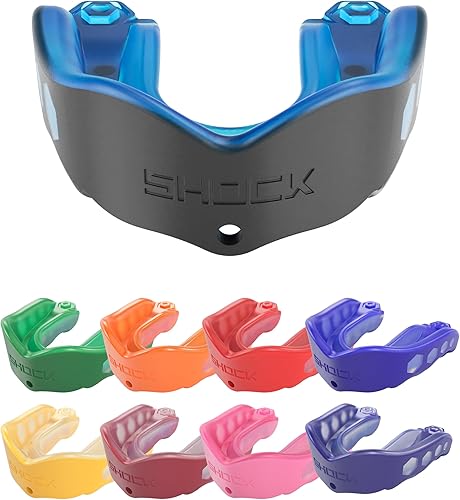
A mouthguard is the one piece of gear you should own before your first sparring class, even at light contact. Boil-and-bite guards soften in hot water and mold to your teeth in about a minute. Fit it a day early so you can redo it if it feels loose. A guard that fits well lets you breathe and talk a little. Rinse it after class and store it in a vented case.
Best starter$11.99as of Nov 19, 2026★★★★★ our ratingIn Stock
Shock Doctor
Gel Max Mouthguard, Adult
A thick boil-and-bite guard with a gel lining that molds well on the first try. It comes with a case and a strap you can cut off. Many dojos and youth leagues use it as the default. Sold by Amazon. About $11.99, 4.2 stars from 11,062 ratings.
A thin guard you can remold up to 20 times. It's much easier to breathe and talk through than a thick guard, which helps when the sensei is giving instructions mid round. Sold by recommerce. About $16.99, 4.4 stars from 10,719 ratings.
A basic boil-and-bite guard with a case that covers light sparring at a low cost. Good as a first guard or a spare to keep in your bag in case you forget the main one. Sold by Amazon. About $11.76, 4.5 stars from 26,440 ratings.
Most karate homework is stances, basics and kata, which need only floor space. A focus mitt or kick paddle lets a partner hold targets so you can practice punches and kicks with real distance and timing. A few foam floor tiles save your knees and feet if you train on concrete or hard floors. Leave the heavy bag for later.
Best starter$20.99as of Nov 19, 2026★★★★★ our ratingIn Stock
Valleycomfy
Curved Focus Punching Mitts, Pair
A pair of curved mitts a partner wears to catch punches and light kicks. They teach you to hit a moving target at the right distance, which shadow practice can't. Cheap and well reviewed. Sold by Yaopeing. About $21, 4.6 stars from 12,492 ratings.
A light paddle target for roundhouse and front kicks. It's cheap and makes a loud slap, which tells you when the kick landed with the right part of the foot. Kids and adults can both hold it. Sold by Nicunom. About $16.99, 4.7 stars from 496 ratings.
Interlocking 1/2 inch foam tiles that cover a 6 by 6 foot patch of floor for kata practice. They keep bare feet off cold concrete and soften pivots. They pull apart to store under a bed. Sold by Amazon. About $27, 4.6 stars from 60,766 ratings.
The first month of karate is mostly stances, blocks, a few kicks and learning how the dojo runs. Nobody expects you to look good. Here's what each week usually covers and what to practice at home between classes.
Show up two or three times a week, stand in the back row, and copy the person in front of you. That’s most of month one.
Week 1: Etiquette and stances
Bow when you step on and off the floor. Call your teacher sensei. Line up by belt rank, with the white belts at the end. The first thing you’ll drill is front stance: feet about two shoulder widths long, front knee over the toes, back leg straight. Hold it for 30 seconds at home each night. Your thighs will burn. That’s normal.
Learn the straight punch from the hip, with the fist turning over at the last moment. Then the rising block, the downward block and the outside block. Do 20 slow reps of each in front of a mirror. Check that your elbow stays in and your shoulders stay down. Speed comes later.
Most styles start with a short beginner kata, like Taikyoku Shodan or Heian Shodan in Shotokan. It’s about 20 moves in an H shape on the floor. Learn it in pieces of four or five moves. Run it once a day at home in a space about 10 feet square. Count out loud so you keep the rhythm.
Many dojos start controlled sparring around now, often with padded gloves, foot guards and a mouthguard. Contact is light and you stop on the call. Ask what gear the school uses before you buy. Ask about your first belt test too. Most schools test every two to four months.
Need the gear? Our karate gear guide covers gis, belts, sparring gloves, shin and foot guards, mouthguards and home training gear. You might also like taekwondo, judo and kendo.
08
What you don't need yet
Beginners get pressured to buy a lot of stuff that doesn't help them.
Here's what we'd skip on day one.
A heavyweight competition gi A $40 student gi works fine until you're testing for higher belts or competing in kata.
Weapons like bo staffs and sai Most styles don't start kobudo weapons training until intermediate belts, and your sensei will say which to buy.
A freestanding heavy bag A focus mitt or a $20 kick shield works for home drills. Big bags take space and teach habits your sensei may need to fix.
Full WKF competition gear Approved red and blue mitts, foot guards and body protectors only matter once you enter sanctioned tournaments.
09
Your first seven days
A short, real plan to get from gear-on-doorstep to actually doing it.
Visit two or three dojos near you and watch an adult class before signing up.
Ask what the school requires: gi brand and color, patches, and sparring gear.
Buy a middleweight white gi one size up if the dojo doesn't supply one.
Learn to tie your belt with a square knot so the ends hang even.
Practice front stance and a basic front kick for 10 minutes a day at home.
Get a boil-and-bite mouthguard and fit it before your first sparring class.
10
What it costs
Budget start
$60
Typical
$180
A student weight gi and a boil-and-bite mouthguard come to about $60. Add padded sparring gloves, foot guards, shin guards and a focus mitt for home drills to reach about $180. Monthly dojo dues are extra.
11
Common questions
How long does it take to get a black belt?
At most schools, 3 to 5 years of steady training two or three times a week. Schools that promise a black belt in under two years are usually selling a contract more than a skill.
Which karate style should I pick?
Shotokan, Goju-ryu, Shito-ryu, Wado-ryu and Kyokushin are the most common. The teacher and the class schedule matter more than the style. Visit a few dojos and pick the one where the adults look like they're learning.
Am I too old to start karate?
No. Plenty of people start in their 40s, 50s and 60s. Kata and basics are low impact, and a good sensei will let you skip or scale jumps and hard sparring. Tell them about any bad knees or back problems on day one.
Do I need to be fit before I start?
No. The warmups, stances and basics build the fitness. Expect sore thighs and calves for the first two weeks from low stances. Bring water and go at your own pace.
How do I wash my gi?
Wash it cold after every class and hang it to dry. Hot water and the dryer shrink cotton. Skip washing the belt. Colored belts can bleed dye onto the gi.
 Just Beginning