By Colin B., published November 12, 2026, last reviewed November 12, 2026By Colin B., updated Nov 12, 2026We earn a commission if you buy through our links. How this works
Good matcha is smooth, grassy and a little sweet. Bad matcha is bitter, dull green and gritty, and most people who think they dislike matcha have only had the bad kind. Here's what ceremonial and culinary really mean on a label, the four tools you need, how to whisk without clumps, and when a frother is fine.
00
The short version
Starter budget
$42 to $120
How hard
Easy to start
Day one
Order a small tin of drinking matcha and a whisk set with a bowl.
It isn't a regulated grade, and brands put it on everything. Look instead for where it's from (Uji, Kagoshima and Nishio are common), a harvest note like first harvest, and a bright, vivid green color. Dull, yellowish or brownish powder will taste bitter however it's labeled.
Buy small tins.
Matcha starts to fade within weeks of opening, so a 30 to 40g tin you'll finish in a month beats a big bag that goes stale. Keep it sealed in the fridge and let it warm to room temperature before opening to avoid condensation.
Decide how you'll drink it.
Straight matcha (usucha) needs a better powder and a bamboo whisk. Lattes hide a lot, so a cheaper culinary matcha and an electric frother work fine. Many people buy one of each.
02
Matcha powder
Matcha is shade-grown green tea, steamed, dried and stone-ground into powder. Shading boosts the amino acids that give it sweetness and savory depth. Better matcha comes from younger leaves, tastes smooth and vegetal, and froths easily. Cheaper culinary matcha uses later harvests, tastes more astringent, and is meant for lattes, smoothies and baking, where milk and sugar balance the bitterness.
Best starter$24.99as of Nov 12, 2026★★★★★ our ratingIn Stock
Naoki Matcha
Superior Blend Matcha, 40g
A Japanese-grown matcha blended for smoothness, so it tastes rich and grassy whisked with plain water but is still reasonable to use in lattes. It's the brand beginners most often say changed their mind about matcha. About $25. 7,600+ reviews at 4.5 stars.
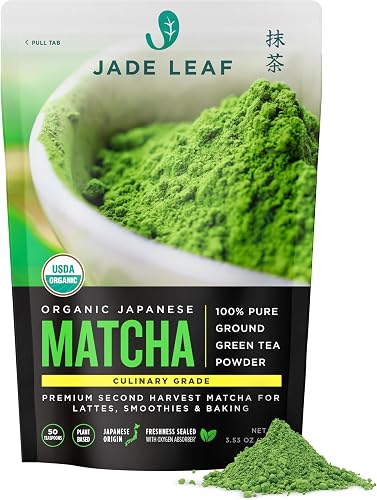
Jade Leaf's organic, Japanese-grown first-harvest drinking matcha, in a small tin you'll finish while it's fresh. Easy to find, consistent and pleasant whisked or in a latte, if a little less sweet than Naoki. About $27. 8,000+ reviews at 4.5 stars.
The most popular culinary matcha on Amazon, for lattes, smoothies and baking. Strong enough to taste through milk and sugar, at a fraction of the price of drinking matcha. Don't judge matcha by it on its own with water. About $28. 83,000+ reviews at 4.5 stars.
From Ippodo, a Kyoto tea house that has been selling tea for 300 years. Horai is sweet, mellow and deep, the kind of matcha that shows you what the fuss is about. Buy it once you've learned to whisk, so you can taste the difference. About $45. 2,600+ reviews at 4.6 stars.
A bamboo whisk (chasen) has dozens of fine prongs that whip matcha and water into a smooth froth in about 15 seconds. A wide bowl with a flat bottom gives the whisk room to move in a quick back-and-forth zigzag. A mug is too narrow. Soak the whisk in warm water for a minute before using it so the prongs soften and don't snap, and dry it on a holder so it keeps its shape.
Best starter$29.99as of Nov 12, 2026★★★★★ our ratingIn Stock
TANG PIN
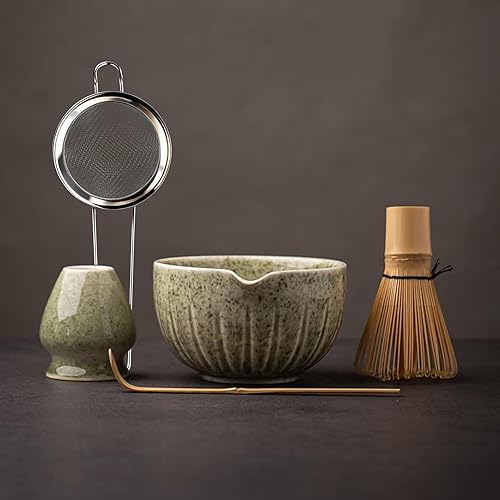
Matcha Set: Bowl, Bamboo Whisk, Holder and Scoop
A wide 15 oz porcelain bowl, a 100-prong bamboo whisk, a whisk holder and a bamboo scoop. Everything you need to whisk properly, and the bowl is big enough to mix a latte base. About $30. 1,300+ reviews at 4.7 stars.
We like
Wide bowl makes whisking easy
100-prong bamboo whisk
Holder keeps the whisk in shape
Know this
Bamboo whisks wear out in a few months of daily use
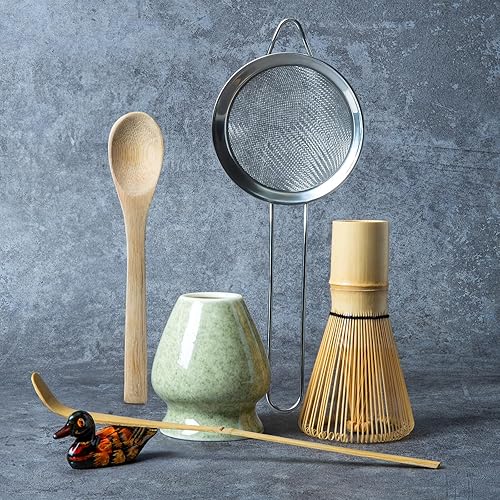
A bamboo whisk, a ceramic whisk holder, a bamboo scoop and a small sifter, without the bowl. A good pick if you already own a wide cereal or soup bowl. About $9. 1,200+ reviews at 4.5 stars.
Matcha is ground so finely that it clumps from static and humidity. Sifting it through a fine mesh before adding water breaks up clumps and is the easiest way to a smooth cup. Once opened, matcha is damaged by light, air, heat and moisture. Keep it in an airtight, opaque container in the fridge, and try to finish it within a month or two.
Best starter$7.95as of Nov 12, 2026★★★★★ our ratingIn Stock
Naoki Matcha
Large Stainless Steel Matcha Sifter with Handle
A fine-mesh sifter with a handle that rests across your bowl. Tap in a scoop of matcha, press it through with the back of the scoop, and the clumps are gone. About $8. 260+ reviews at 4.6 stars.
An opaque steel tin with an airtight inner lid and an outer cap. Decant your matcha into it if the original packaging is a bag, or keep culinary matcha fresher between lattes. About $17. 150+ reviews at 4.7 stars.
An electric frother can't match a bamboo whisk for a straight cup, but it's great for lattes. Use it to blend matcha with a splash of warm water into a smooth paste, then froth the milk. It's faster than a whisk, easy to clean and handles cold drinks well. Many people use the whisk on weekends and the frother on workday mornings.
Best starter$11.99as of Nov 12, 2026★★★★★ our ratingIn Stock
Zulay Kitchen
Powerful Milk Frother Wand
The best-selling handheld frother, with a stand. It mixes matcha into a smooth paste in seconds and froths milk for a latte in under a minute. Runs on AA batteries. About $12. 235,000+ reviews at 4.4 stars.
We like
Fast and easy to clean
Great for iced lattes
Stand included
Know this
Thinner foam than a bamboo whisk for straight matcha
The same idea with a USB-C rechargeable battery, three speeds and three whisk heads. The low setting mixes the matcha paste without splashing and the high one froths the milk. About $17. 20,000+ reviews at 4.4 stars.
Whisking a smooth, frothy bowl of matcha takes a few tries, and most of the skill is in the details: water temperature, the right ratio and a fast wrist. Here's a two-week plan from your first gritty bowl to a cup you'd happily pay a cafe for.
The first bowl of matcha most people make is lumpy, a little bitter and flat on top. That’s normal. Matcha rewards a few small habits, and once you have them the whole thing takes about two minutes.
Days 1 to 3: The basic bowl
Fill your bowl with hot water and set the bamboo whisk in it for a minute to soften the prongs and warm the bowl. Pour the water out and dry the bowl.
Sift 2 grams of matcha into the bowl. That’s about two heaping scoops with a bamboo scoop, or one level teaspoon. Sifting matters more than it seems: it breaks up clumps that no amount of whisking will fix.
Add 70ml of water at about 175F. Boiling water scalds matcha and makes it bitter. If you don’t have a kettle with a temperature setting, boil water and let it sit for three or four minutes.
Now whisk. Hold the bowl with one hand and the whisk upright with the other, and move it in a fast zigzag (an M or W shape) from your wrist, not your arm. Keep the prongs just off the bottom. After 15 to 20 seconds you should see fine foam. Slow down and draw the whisk up through the center to finish.
Taste your cup straight. Then adjust one thing at a time.
Too bitter or harsh: drop the water a few degrees, or use a little less powder.
Too thin or watery: add half a gram more matcha, or 10ml less water.
No foam: whisk faster, keep your wrist loose, and check the powder is fresh.
Write down what you changed. By the end of the week you’ll have a ratio that suits you and your matcha.
Days 8 to 10: Lattes and iced matcha
Lattes are where a cheaper culinary matcha shines. Make a paste first: sift 2 to 3 grams into a bowl, add a splash of warm water, and whisk or froth until smooth with no lumps. Pour it over warm or iced milk. Oat milk is popular because its sweetness balances matcha’s bitterness.
For iced matcha with water, whisk a normal bowl, then pour it over a glass of ice. It’s surprisingly refreshing on a hot day.
Rinse the whisk in warm water right after using it. No soap, which leaves a taste in the bamboo. Shake it out and set it on its holder to dry, which keeps the prongs in shape. Prongs will slowly break; replace the whisk when it starts shedding.
Keep your opened matcha sealed in the fridge, and let the tin warm up before opening it so moisture doesn’t condense inside. If the color dulls or the taste goes flat, it’s stale.
Once you can whisk a smooth bowl without thinking about it, try a step-up matcha from a Kyoto tea house. Now that you know what you’re doing, you’ll taste the difference right away.
Make usucha: sift 2g of matcha (about two bamboo scoops) into the bowl, add 70ml of water at about 175F, and whisk in a fast zigzag for 15 to 20 seconds.
Never use boiling water. Let a kettle sit for a few minutes, or mix a little cold water into hot.
Try a latte: whisk the matcha into a paste with a splash of warm water, then pour over milk and ice.
Store the opened tin sealed in the fridge, and let it warm up before opening.
A tin of Naoki Superior Blend, a whisk set with scoop and holder, and a sifter come to about $42. Add a proper bowl set, an airtight canister, a frother and a bag of culinary matcha for lattes and you're near $120.
10
Common questions
Why does my matcha taste bitter?
Usually one of three things: water that's too hot, too much powder for the water, or low-quality or stale matcha. Use water around 175F, start with 2g in 70ml, and buy small tins of fresh, bright green drinking matcha.
What does ceremonial grade mean?
Nothing official. It's a marketing term that brands outside Japan use for their drinking matcha. Judge by color (vivid green), origin, harvest, smell and price instead. Very cheap matcha labeled ceremonial is usually culinary quality.
Why won't my matcha froth?
Sift it first, use enough powder, and whisk faster in a zigzag from your wrist rather than stirring in circles. Older or lower-grade matcha also froths less. A bamboo whisk and a wide bowl make a big difference.
How much caffeine is in matcha?
A typical cup made with 2g of matcha has roughly 60 to 70mg of caffeine, a bit less than a cup of coffee. Many people find the energy steadier, which is often credited to L-theanine, an amino acid matcha is rich in.
Can I use a metal whisk or a fork?
A small metal whisk works in a pinch but leaves more clumps and less froth. A handheld electric frother is a much better backup. For straight matcha, a bamboo whisk is worth the $10.
 Just Beginning