By Colin B., published November 18, 2026, last reviewed November 18, 2026By Colin B., updated Nov 18, 2026We earn a commission if you buy through our links. How this works
A backyard fruit tree is a ten-year project that starts with two quick decisions: a variety that gets enough winter chill in your zone, and a rootstock that keeps the tree a size you can prune from the ground. Here's how to pick and plant trees, the pruning tools that matter, a simple spray schedule, and how to protect the fruit.
00
The short version
Starter budget
$110 to $300
How hard
Some practice
Day one
Look up your hardiness zone and ask your extension office which varieties do well locally.
Apples, pears, peaches and cherries need a certain number of chill hours (time between 32 and 45 degrees F) to fruit. A low-chill variety in Minnesota freezes; a high-chill variety in Southern California never blooms well. Your extension office lists the varieties that do well near you.
Rootstock sets the tree's size.
The same apple variety can be grafted onto dwarf rootstock (8 to 10 feet tall), semi-dwarf (12 to 15 feet) or standard (20 feet or more). Dwarf and semi-dwarf trees fruit sooner and can be pruned and picked from the ground or a short ladder. Dwarf trees usually need staking for life.
Check pollination.
Many apples, pears, sweet cherries and plums need a second compatible variety blooming at the same time nearby. Peaches, tart cherries and some plums are self-fertile. If you only have room for one tree, buy a self-fertile variety or a multi-graft tree.
Buy bare-root in late winter.
Nurseries ship dormant bare-root trees from about January to April. They cost less, establish faster and have a much better variety selection than potted trees at a big box store. Order in fall or early winter for the best picks.
02
Hand pruners
Bypass pruners do most fruit tree pruning: shoots, small branches and spurs up to about 3/4 inch thick. Buy bypass, not anvil pruners. Bypass blades cut like scissors and leave a clean cut that heals well; anvil pruners crush live wood. A good pair stays sharp, has replaceable parts and fits your hand. Clean and oil the blades after each session, and wipe them with alcohol between trees when you cut out diseased wood.
Best starter$67.93as of Nov 18, 2026★★★★★ our ratingIn Stock
Felco
F2 Classic Bypass Pruning Shears
The pruner orchard workers and arborists have used for decades. Forged aluminum handles, a hardened steel blade that holds an edge, and every part is replaceable, so one pair can last a lifetime. Sold by Amazon. About $68, 4.8 stars from 14,527 ratings.
A forged aluminum bypass pruner with a 1-inch capacity for under $20. It's the best budget pick if you have one or two trees and don't want to spend Felco money yet. Sold by Amazon. About $18, 4.6 stars from 378 ratings.
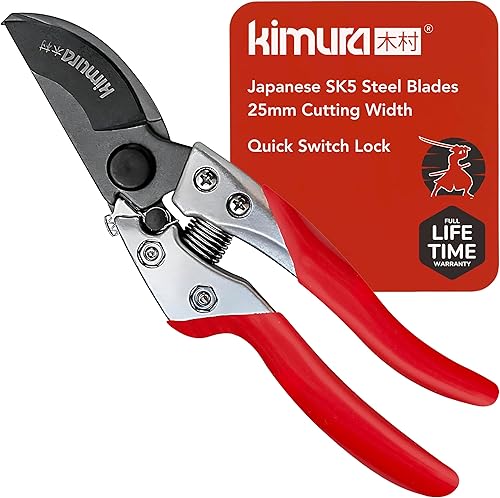
A sharp Japanese-steel bypass pruner with a comfortable grip and lots of strong reviews, a middle option between Corona and Felco. About $25, 4.8 stars from 2,845 ratings.
Loppers cut branches from about 3/4 inch to 2 inches thick, and the long handles reach into the tree. A pruning saw cuts anything thicker, and a folding Japanese pull saw cuts fast and clean. A pole pruner reaches the top of a semi-dwarf tree from the ground, so you don't need a ladder for most cuts. Always cut just outside the branch collar (the swollen ring where a branch meets the trunk), and never leave a stub.
Best starter$42.43as of Nov 18, 2026★★★★★ our ratingIn Stock
Fiskars
32" PowerGear2 Bypass Loppers, 2" Cut Capacity
Geared loppers that multiply your force, so 2-inch branches cut with much less effort than plain loppers. The 32-inch handles reach into the middle of a tree. Sold by Amazon. About $42, 4.7 stars from 7,499 ratings.
A small Japanese folding pull saw that cuts live branches fast and leaves a clean face. It folds into a pocket, so it comes along on every pruning day. About $58, 4.9 stars from 2,091 ratings.
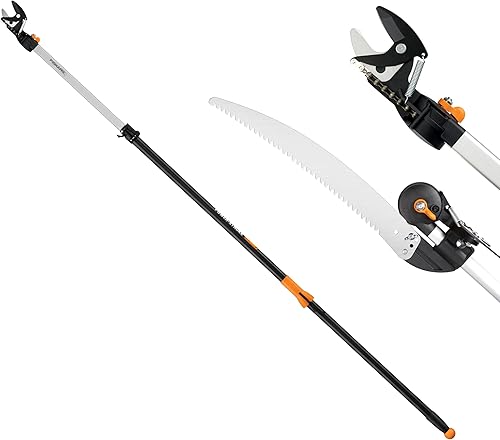
8-12 Ft Extendable 2-in-1 Tree Pruner and Pole Saw
A pole pruner with a rope-pulled cutter and a saw blade on a rotating head, reaching up to 12 feet. It makes most top cuts on semi-dwarf trees from the ground. Sold by Amazon. About $164, 4.5 stars from 4,338 ratings.
Most home orchards get by with very little spray. The most useful is horticultural or dormant oil, a refined mineral oil sprayed in late winter before buds open. It smothers overwintering scale, mites and insect eggs, and it's approved for organic gardening. You'll also need a small pump sprayer. Read every label, spray on calm days, and ask your extension office for a local schedule before adding anything stronger.
Best starter$9.98as of Nov 18, 2026★★★★★ our ratingIn Stock
Bonide
All Seasons Horticultural and Dormant Spray Oil, 16 oz Concentrate
Refined mineral oil for late-winter dormant sprays and lighter summer sprays, approved for organic gardening. The concentrate makes several gallons. Sold by Amazon. About $10, 4.5 stars from 4,880 ratings.
A simple 1-gallon tank sprayer with a wide funnel top and an adjustable nozzle, the right size for a few backyard trees. Rinse it with clean water after every use. Sold by Amazon. About $15, 4.3 stars from over 105,000 ratings.
Protecting the tree is often easier than spraying it. Mesh fruit bags slipped over young fruit keep moths, maggots and birds off apples and pears. Netting over a small tree keeps birds off cherries and plums. Trunk guards stop rabbits, voles and string trimmers from girdling young trunks, which can kill a tree in one winter. Remove spiral guards in summer so bark stays dry.
Best starter$13.99as of Nov 18, 2026★★★★★ our ratingIn Stock
HRX Package
100pcs Mesh Fruit Protection Bags, 6x9 in
Reusable drawstring mesh bags that go over young fruit after thinning. They keep codling moths, apple maggots and birds off without spraying. A hundred covers a couple of small trees. About $14, 4.4 stars from 1,205 ratings.
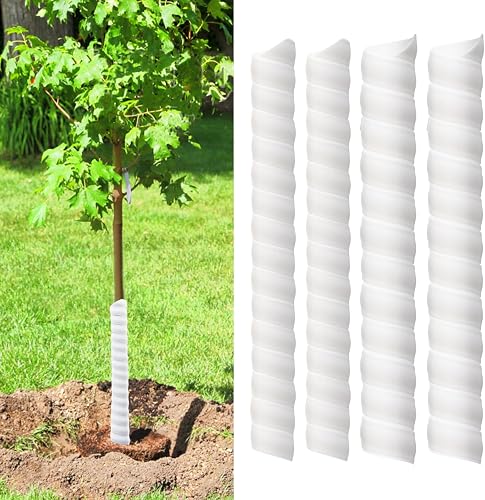
Plastic spiral guards that wrap young trunks and expand as the tree grows. They stop rabbit, vole and string trimmer damage in winter. About $15, 4.6 stars from 714 ratings.
Fruit Tree Netting Cover with Zipper, 2 Pack, 8x8 ft
Fine mesh bags that go over a whole small tree and close at the trunk with a drawstring, with a zipper for picking. Good for cherries, plums and figs that birds strip in a morning. About $25 for two, 4.5 stars from 730 ratings.
Mesh Tree Bark Protector Guard, 48 Inches (5 Pack)
Tall, breathable mesh guards that protect trunks from deer rubbing as well as rabbits, and can stay on year-round. About $40 for five, 4.4 stars from 1,111 ratings.
Dwarf trees are picked from the ground. Semi-dwarf and older trees need a fruit picker on a pole or a ladder. Never use a regular step ladder on soft ground under a tree. An orchard tripod ladder has a third leg that goes into the branches and stays stable on uneven ground. A basket picker on a pole is cheap and reaches high fruit without climbing.
Best starter$19.99as of Nov 18, 2026★★★★★ our ratingIn Stock
DonSail
Fruit Picker Pole with Basket, 35-65 Inch Adjustable
A metal basket with claw fingers on an adjustable pole. Hook the fruit, pull, and it drops into the basket without bruising. Enough reach for most dwarf and semi-dwarf trees. About $20, 4.4 stars from 3,762 ratings.
A tripod ladder with a single back leg that sets into the branches and stays steady on soft, uneven ground where a step ladder tips. Fiberglass, rated for 300 pounds. About $320, 4.4 stars from 58 ratings.
The first year with a fruit tree is about roots, not fruit. Get the variety right, plant it well, make the first pruning cut with confidence and keep pests in check. Here's a season-by-season plan from ordering a bare-root tree to putting it to bed in fall.
A fruit tree planted well in year one gives fruit for decades. Most of the work is done in the first season, and most of it is simple.
Winter: Choose and order
Find your zone and your area’s chill hours, then ask your extension office or a local fruit club which varieties do well. Choose a rootstock for the size you want and check pollination partners. Order bare-root trees from a fruit nursery in early winter, before popular varieties sell out.
Plant as soon as the ground can be worked. Soak the roots for a few hours, dig a hole twice as wide as the roots but no deeper, and spread the roots out. Keep the graft union (the bump on the trunk) 2 to 3 inches above the soil, or the top variety can root and you lose the dwarfing.
Then make the heading cut. Cut a single-stem tree back to about 24 to 36 inches tall, just above a bud. It feels wrong, but it makes the tree grow low scaffold branches you can reach later.
Water deeply once a week in the first summer unless it rains, about 5 gallons per tree. Spread wood chip mulch in a wide ring and keep it a few inches away from the trunk. Pull any fruit that forms in the first year so energy goes to roots.
Watch for aphids, borers and leaf diseases, and ask your extension office what’s out in your area. Bag young fruit on older trees with fruit bags to keep moths and maggots off.
Rake and remove fallen leaves and fruit, which carry diseases and pests into next year. Put a trunk guard on to stop rodents and sunscald over winter. Then plan next year’s pruning and the dormant oil spray for late winter, before buds open.
Dig a wide, shallow hole and plant with the graft union 2 to 3 inches above the soil.
Add a trunk guard, a stake if dwarf, and a ring of mulch kept away from the trunk.
10
What it costs
Budget start
$110
Typical
$300
Felco F2 pruners, Fiskars 32-inch loppers, a bottle of Bonide dormant oil, a Chapin sprayer and a set of trunk guards come to about $160, or about $110 with Corona pruners and the 28-inch loppers. Add a Silky saw, fruit bags, netting and a pole pruner for about $300. Trees themselves run $30 to $60 each bare-root.
11
Common questions
How long until I get fruit?
Dwarf trees often fruit in 2 to 3 years, semi-dwarf in 3 to 5, and standard trees in 5 to 8. Peaches are usually fastest. Remove fruit in the first year or two so the tree grows roots and branches first.
Do I need two trees?
For most apples, pears, sweet cherries and Japanese plums, yes: a second variety that blooms at the same time, within about 50 feet. A neighbor's tree or a crabapple may do the job. Peaches, nectarines, tart cherries and some plums are self-fertile.
What are chill hours?
The number of winter hours between about 32 and 45 degrees F a tree needs before it blooms properly. Varieties range from under 200 hours (for the South and Southern California) to over 1,000. Pick varieties that match your area.
When do I prune?
Most pruning happens in late winter, while the tree is dormant and before buds open. Summer pruning is used to slow growth on vigorous trees. Cut out dead, damaged and crossing branches first, and keep the center open for light.
Do I have to spray?
Most home trees need some protection, but it doesn't have to be harsh. Dormant oil in late winter smothers overwintering insects and eggs. Fruit bags, kaolin clay and good cleanup of fallen fruit handle much of the rest. Your extension office has a local schedule.
 Just Beginning