By Colin B., published November 16, 2026, last reviewed November 16, 2026By Colin B., updated Nov 16, 2026We earn a commission if you buy through our links. How this works
A thick, green lawn is mostly timing, not products. Test the soil, mow high, water deep and seed in the right month, and a $40 spreader does more than a garage full of bottles. Here's how cool and warm season grass differ, which mower fits your yard, and what the lawn nerd crowd over-buys.
00
The short version
Starter budget
$110 to $800
How hard
Easy to start
Day one
Look up your grass type and your region's lawn calendar on your state's extension site.
Cool-season grasses (tall fescue, bluegrass, rye) peak in spring and fall and get their big feeding and seeding in September. Warm-season grasses (Bermuda, zoysia, St. Augustine) grow in summer and are fed from late spring on. Buying for the wrong calendar wastes a whole year.
Test the soil before buying fertilizer.
A $25 to $35 lab test tells you pH and what nutrients are actually missing. Most lawns don't need the phosphorus in an all-purpose bag, and some need lime more than anything else.
Match the mower to the yard.
Under about a quarter acre, a 40V battery mower is quieter, starts every time and needs no oil or gas. A reel mower only makes sense for short warm-season grass like Bermuda. Big or hilly lots are where self-propelled and gas earn their keep.
02
Soil test kits
A soil test is the cheapest way to stop wasting money. It tells you your soil pH and whether you're short on phosphorus, potassium or other nutrients, so you can pick a fertilizer that fixes your actual problem. Lab tests that you mail in are far more accurate than color-change capsules. Your state's extension office often runs one for $15 to $30 too. Take six to eight samples about four inches deep from around the yard and mix them together.
Best starter$26.95as of Nov 16, 2026★★★★★ our ratingIn Stock
Soil Savvy
Soil Test Kit
A mail-in lab test that reports pH, the major nutrients and micronutrients, then gives plain fertilizer recommendations for your lawn. Prepaid shipping is included and results come by email in about a week. About $27.
A home chemistry kit with color-change capsules for pH, nitrogen, phosphorus and potash, with enough for 40 tests. It's rough compared with a lab, but fine for checking pH in different parts of the yard. About $16.
Another mail-in lab test with a very easy app and nutrient charts that show where you sit against the ideal range for grass. A good choice if you want clearer reports. About $35. 3,800+ reviews at 4.6 stars.
For most yards under about a quarter acre, a 40V to 56V battery mower is now the best choice: quiet, no gas or oil, and it starts every time. Look for a 21-inch deck, a brushless motor, mulching and a height adjustment that goes up to at least 4 inches. Self-propelled is worth it on hills or bigger lots. Reel mowers cut short warm-season grass beautifully, but struggle with tall fescue at 3.5 inches and above.
Best starter$483.27as of Nov 16, 2026★★★★★ our ratingIn Stock
Greenworks
40V 21-Inch Brushless Self-Propelled Mower
A 21-inch self-propelled battery mower with a brushless motor, mulching, bagging and side discharge, and a high enough deck setting for cool-season grass. It handles most yards up to a quarter acre on a charge, with a battery and charger included. About $483. 1,500+ reviews at 4.1 stars.
EGO's 56V platform is the one battery lawn enthusiasts most often recommend: strong cutting power, fast charging and a big range of tools on the same battery. This kit includes the battery and charger. About $599. 400 reviews at 4.5 stars.
A classic push reel mower for small, flat lawns of Bermuda or zoysia kept short. It gives a clean scissor cut, makes almost no noise and needs nothing but an occasional blade adjustment. About $142.
A broadcast spreader throws granular fertilizer, seed and lime in an even arc. Even coverage is the whole job, so pick one with clear settings for the products you'll use and an edge guard that stops it throwing onto driveways and flower beds. Calibrate it once on a tarp or driveway before your first application, overlap your wheel tracks slightly, and do the perimeter first. Small yards can get by with a hand spreader.
Best starter$107.97as of Nov 16, 2026★★★★★ our ratingIn Stock
Scotts
Turf Builder EdgeGuard DLX Broadcast Spreader
The spreader most lawn hobbyists end up with. It holds enough for about 15,000 square feet, comes pre-calibrated with settings printed on every Scotts bag, rolls well on bumpy lawns, and its EdgeGuard flips down to stop product landing on sidewalks. About $108. 6,500+ reviews at 4.4 stars.
A hand-crank spreader for small lawns, spot seeding and patching thin areas. You walk and turn the handle, and it spreads seed, fertilizer or ice melt. It's enough for a small yard, but a wheeled spreader is more even on anything bigger. About $25. 2,000+ reviews at 4.7 stars.
A pump sprayer is how you spot-treat weeds and apply liquid products without buying ready-to-spray bottles at triple the price. Start with a 1-gallon sprayer for weeds. Bigger lawns and whole-yard applications are easier with a 2-gallon handheld or a backpack sprayer. Keep one sprayer only for weed killer and label it, because traces left inside can harm plants if you later use it for something else.
Best starter$15.49as of Nov 18, 2026★★★★★ our ratingIn Stock
Chapin
1-Gallon Pump Sprayer (20004)
A simple, translucent 1-gallon sprayer with an adjustable nozzle, ideal for spot-spraying weeds in the lawn and driveway cracks. It's one of the best-reviewed garden tools on Amazon. About $15. 105,000+ reviews at 4.3 stars.
A sturdier 2-gallon sprayer with Viton seals that hold up to chemicals longer than basic seals. More capacity means fewer refills for larger weed jobs. About $41.
For spraying a whole lawn or a large property. A 4-gallon tank on padded straps with three stages of filtration to stop clogs, and a pump handle you work as you walk. About $110.
A string trimmer cleans up along fences, beds and trees where the mower can't reach, and an edger cuts a clean line along sidewalks and driveways. Many trimmers rotate to edge, which is enough for most homes. If you already have a battery mower, buy a trimmer on the same battery platform so you only charge one kind of battery. A 12 to 15 inch cutting width is plenty for a typical yard.
Best starter$137.34as of Nov 16, 2026★★★★★ our ratingIn Stock
WORX
20V 12-Inch 2-in-1 String Trimmer and Edger (WG163)
A light trimmer that rotates into a wheeled edger in seconds, with a push-button line feed. It's ideal for small and medium yards and includes two batteries and a charger. About $137. 28,000+ reviews at 4.3 stars.
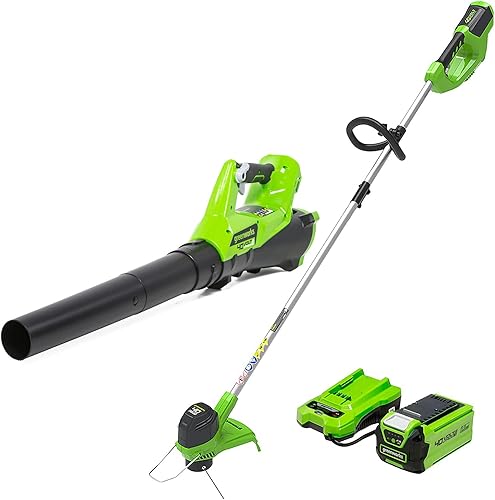
A trimmer and a leaf blower with one shared 40V battery for about the price of a trimmer alone. The trimmer head rotates for edging, and the battery also fits Greenworks 40V mowers. About $120. 10,000+ reviews at 4.3 stars.
A 15-inch trimmer with gas-like power, a wider cut and EGO's 56V battery, which also runs EGO's mowers and blowers. The head can be turned for edging. A good buy if you went with an EGO mower. About $199. 3,300+ reviews at 4.2 stars.
Overseeding every fall is how cool-season lawns stay thick. Buy a seed blend suited to your grass and your sun, with a low weed seed percentage on the label, and pair it with a starter fertilizer that's high in phosphorus to help new roots. Seed between late August and mid-September in the North. Warm-season lawns are seeded or plugged in late spring instead, and the right grass depends on your region.
Best starter$33.77as of Nov 16, 2026★★★★★ our ratingIn Stock
Scotts
Turf Builder Grass Seed Tall Fescue Mix, 5.6 lb
Tall fescue is the toughest, most drought-tolerant cool-season grass for sun and partial shade, and this coated mix is easy to find. 5.6 lb overseeds about 2,000 square feet. About $34.
A mix of fescues, bluegrass and ryegrass for northern lawns that get a mix of sun and shade, in a 20 lb bag that overseeds a large lawn. A good pick if your yard has trees. About $57. 5,500+ reviews at 4.1 stars.
A phosphorus-rich starter fertilizer that helps new seed root quickly. Spread it the same day you seed, using the setting printed on the bag. About $35. 11,000+ reviews at 4.5 stars.
A good lawn is mostly timing: test the soil, mow high, water deep and seed in the right month. Here's a season-long plan that takes you from a soil test to your first fall overseed, without buying half the garden center.
Most lawns don’t need more products. They need fewer mistakes: mowing too short, watering a little every day, and spreading fertilizer in the wrong month. Fix those three and the grass does most of the work.
Weeks 1 to 2: Know what you’re growing
Start by figuring out your grass. Cool-season grasses (tall fescue, Kentucky bluegrass, perennial ryegrass) grow in the northern half of the US and love spring and fall. Warm-season grasses (Bermuda, zoysia, St. Augustine, centipede) grow in the South and peak in summer. Your local extension service can tell you in a minute what’s common in your area, and that single fact sets your whole calendar.
Then test the soil. Dig six to eight small samples about four inches deep from around the yard, mix them in a clean bucket, and send it off. The report tells you your pH and whether you’re short on phosphorus or potassium. Most people skip this and buy the wrong fertilizer for years.
Raise the mower. For tall fescue that means 3.5 to 4 inches. For Bermuda, 1 to 2 inches with a sharp blade or a reel mower. Never take off more than a third of the blade at once, even if that means mowing twice a week in spring.
Water less often, but more. About an inch a week, in one or two long sessions early in the morning, pushes roots deep. Set a few empty tuna cans on the lawn while the sprinkler runs and time how long it takes to fill them an inch. That’s your run time.
Leave the clippings. A mulching mower drops them back as free nitrogen, and they don’t cause thatch.
Calibrate your spreader before the first bag. Spread over a driveway on a dry day, or set a tarp out and weigh what lands, until you know which setting gives the rate on the bag. Overlap your wheel tracks slightly, and do the perimeter first.
For cool-season grass, the big feedings go in fall (early September and again around Thanksgiving), with a light one in late spring. Warm-season grass is fed from late spring through summer, while it’s growing. Pre-emergent crabgrass control goes down in spring when soil hits about 55F, roughly when forsythia blooms.
For cool-season lawns, late August to mid-September is the one window that matters most. Soil is warm, nights are cool and weeds slow down.
Mow short (about 2 inches), rake out dead grass, and spread seed at the overseed rate on the bag. Rake it in lightly so it touches soil, then put down a starter fertilizer. Keep the top of the soil damp, which usually means two or three light waterings a day for the first two weeks. Don’t use a pre-emergent weed killer at the same time; it stops grass seed too.
By late October you’ll have new grass thick enough to mow. Raise the mower back up, and you’re done for the year.
You don’t need a lawn aerator, a $600 broadcast spreader, a dozen bottles of liquid “biostimulants” or a reel mower unless you grow warm-season grass short. Get the basics right for one season, then see what’s still wrong.
Need the gear? Our lawn care gear guide covers soil tests, mowers, spreaders, sprayers and trimmers.
09
What you don't need yet
Beginners get pressured to buy a lot of stuff that doesn't help them.
Here's what we'd skip on day one.
A riding mower or zero-turn Unless you have more than half an acre, a walk-behind mower is cheaper, fits in the garage and cuts more evenly.
A core aerator Most lawns only need aerating every few years, if that. Rent one for a day when your soil is truly compacted.
Liquid biostimulant and humic acid kits Popular in lawn forums, but a soil test and the right granular fertilizer fix far more problems for far less money.
A dethatcher Thatch is rarely the real problem in a mulch-mowed lawn. A firm rake before overseeding is enough.
A smart irrigation controller Learn how much water your lawn actually needs with a hose timer and a few tuna cans first.
10
Your first seven days
A short, real plan to get from gear-on-doorstep to actually doing it.
Look up your grass type and your region's lawn calendar on your state's extension site.
Raise your mower deck. Aim for 3.5 to 4 inches for tall fescue, and never cut more than a third of the blade at once.
Set out a few empty tuna cans and time how long your sprinkler takes to fill them an inch.
Sharpen or replace your mower blade. Torn, brown tips mean it's dull.
Learn when pre-emergent goes down: when soil hits about 55F in spring, roughly when forsythia blooms.
11
What it costs
Budget start
$110
Typical
$800
If you already own a mower, a soil test, a hand spreader, a 1-gallon sprayer, a bag of seed and starter fertilizer come to about $110. Add the EdgeGuard DLX spreader, the Greenworks 40V mower and the Worx trimmer and edger and you're near $800.
12
Common questions
When should I overseed?
For cool-season grass, late August to mid-September is the best window: warm soil, cool nights and fewer weeds. Spring seeding works but fights crabgrass and summer heat. Warm-season grasses are seeded or plugged in late spring and early summer.
How often should I water?
About an inch a week, including rain, in one or two deep sessions early in the morning. Short daily watering keeps roots shallow and invites fungus. New seed is the exception: keep the top of the soil damp with light daily watering for the first two to three weeks.
Should I bag or mulch my clippings?
Mulch them. Clippings break down in days and return nitrogen to the soil, and they don't cause thatch. Bag only when the grass is very long, diseased or full of weed seed heads.
Battery or gas mower?
For most yards under about a third of an acre, a 40V or 56V battery mower is the better buy: no gas, no oil, no pull cord, and it's quiet enough to mow early. Gas still wins on big or hilly lots and very thick, wet grass.
Can I use weed and feed and grass seed at the same time?
No. Most crabgrass preventers stop grass seed from sprouting too. Seed first, use a starter fertilizer, and wait until you've mowed the new grass three or four times before using weed control.
 Just Beginning